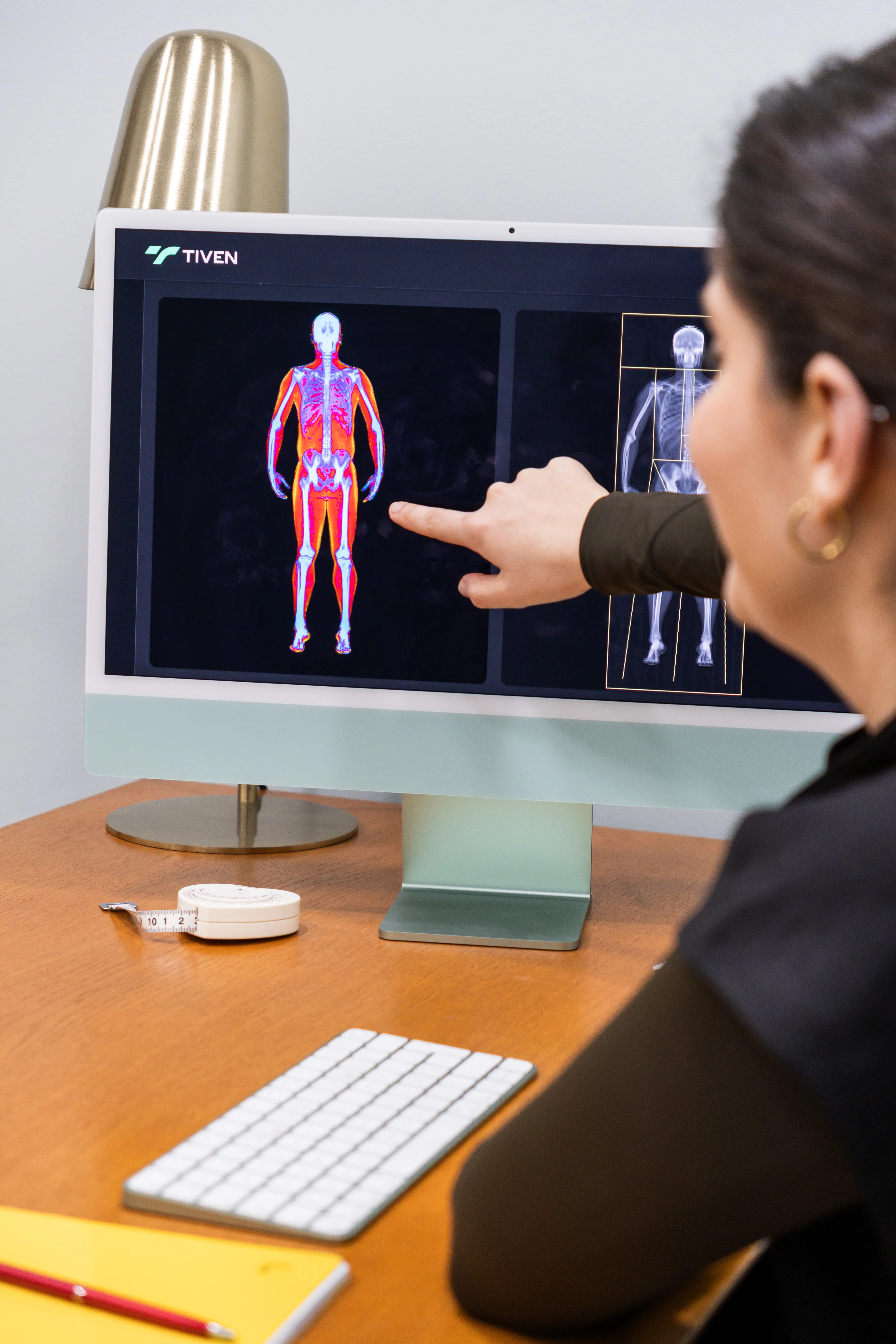
Proactive health is a person's commitment to maintaining their health by measuring it regularly, interpreting it with medical judgement and acting on it before symptoms appear. Unlike preventive medicine, which is organised by the health system, proactive health is something each person chooses and does for themselves.
Looking after your health without waiting to lose it.
Updated on 18 November 2026
proactive health
The three senses say the same thing from three angles. The first is what you do. The second, what you need to do it. The third, the attitude of the person who does it.
They don't compete with each other. They are three ways of looking after your health, and they add up. The difference is who takes the first step, and when.
Preventive medicine is essential, and proactive health doesn't replace it. Nor does it replace your doctor. What it adds is something the system can't do for you: keep a close eye on your own body and decide in time.
Preventive medicine is the system's call. Proactive health is yours.
Some changes progress for years without symptoms, and the scale doesn't see them. They are the natural territory of proactive health.
Visceral fat surrounds your organs. You can't pinch it or see it in the mirror, and it can be high even when your weight is normal.
Glucose, cholesterol or blood pressure can creep up for years without symptoms. You only see them if you measure them.
From a certain age, muscle mass is gradually lost unless you do something to keep it. And bone density falls over the years, faster in women with the menopause.
In perimenopause, fat tends to shift towards the abdomen and body composition changes, even if your weight barely moves.
None of these changes shows up on the scale. All of them can be measured.
Three verbs and one dimension: time. What matters isn't a single measurement, but the trajectory they draw together.
Each measurement is a point on your trajectory. With one, you know where you are. With several, where you're heading.
And the question is no longer just “Am I OK?” but “Am I better than before?” Your main reference is you: your own progress, not just population ranges.
Being better isn't about looks. It's about keeping and gaining muscle, strength, bone, metabolic health and energy. As you age, maintaining is improving too.
Gym and performance
“I want to look good and perform better.”
Body recomposition
“I weigh the same. Has anything changed?”
Hormonal transition and the executive on alert
“Same weight, different body.” “My blood test results came back wrong.”
Cardiometabolic risk
“Is there still time?”
Keeping muscle and bone
“How much muscle do I have left?”
You don't need to change everything. You need to know where you are.
Choose a measurement that goes beyond weight and repeat it over time. Body composition is a good place to start: fat, muscle, visceral fat and bone.
An app gives you numbers. A healthcare professional tells you what they mean for you.
Pick one or two things to change and stick with them. With each new measurement, you'll know whether you're getting better.
No. Preventive medicine is organised by the health system: vaccines, screenings and check-ups according to age. Proactive health is your decision, with data from your own body compared over the years. They don't exclude each other: they add up.
Not exactly. Longevity focuses on living more years. Proactive health focuses on how you get there: with more muscle, more strength and better metabolic health.
No. Proactive health complements medical care and the screenings that apply to you. What it adds is close follow-up of your own body, something nobody usually does.
No. The idea is exactly the opposite: to act while there are none yet, because that's when you have the most room for manoeuvre.
It depends on the test, your goal and your starting point, and it's best decided with a healthcare professional. Each test has its own pace: for example, changes in body composition show up within months, while bone takes longer.